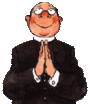
For generations It was a requirement to have a full understanding of what the Communion is and represents. Whether you use the term: Communion,Eucharist, The Mass or Lord's Supper; there was a time that you needed to appreciate the whole the service, where you could with complete confidence that you too had a relationship with the risen Christ; therefore have been "saved", which would now be acted out through the time in the week, month or year when you would receive the Body & Blood of our Saviour Jesus Christ! Those who failed to make such an acknowledgment would have the door of communion closed to them for membership was not available to them!
Now we have turned a full 360 degrees, when anyone can receive the elements what ever they believe or do not! They do not have to be Christian, they do not have to believe in anything. They may just happen to be there!
So are we wrong with our "Open Communion" policy? Should it be left to the Holy Spirit and the Grace of our Lord? or should a set of rules be placed, so to prevent those who do not adhere to the Christian faith in a living relationship with Jesus Christ, will be refused?
Where are we going in the 21st century? Do we move with the times? compromise belief or are we to learn what God wants of us and therefore recognise that God is a God of surprises and what was okay last year, is not this year! While scripture is scripture, should we recognise that the Lord gives us new Revelations for today's Church and today's world!!
Tuesday, 20 May 2008

Thursday, 15 May 2008
Alfred and Emily

Has childhood happiness ever produced a Nobel laureate? Doris Lessing, you might say, has spent a lifetime restlessly discovering the answer to that question. Forty-two books of fiction, seven collections of essays, two memorable memoirs have led her to this, another examination of the writer's DNA, another decisive distillation of all that has gone before.
Alfred Tayler and Emily McVeagh are the writer's parents and this is a book of two halves - the first section is a novelist's game of might-have-beens: Lessing removes all the frustrations that circumscribed her growing up in Rhodesia, and gives Alfred and Emily the lives they wanted for themselves. The second section is another honest excavation of the lives they were all actually dealt. The gap is the one in which the writer has always lived.
The might-have-beens remove at a stroke the first obstacle to all of the last century's unhappiness. Lessing imagines a world without the Great War; Alfred, her father, lost a leg to shrapnel in the trenches and, in her mind, and probably his, that fact hobbled everything that went after. What if his leg had never received that shrapnel, what if a generation had not been destroyed, what if Edwardian prosperity had gone on and Britain had remained at peace?
For a start, Alfred would not have stopped playing cricket with the farmers' boys on the green in Essex. It's there that Lessing begins - the idyll, Alfred at the crease, 16 years old, a gifted boy among men, Emily watching from the boundary, the long, hot summer of 1902 and all their lives laid out before them. Lessing knows those lives, as she knows her own. And she knows the germ of insatiable defiance that would, in any case, have formed each of them.
Alfred and Emily began, as she began, perhaps as all children begin, by letting their parents down. Alfred was determined, against his family's wishes, to become a farmer; we meet Emily at the point of her first defiance - she has told her father she will not, as he wants, go to university but, instead, she will become a nurse at the Royal Free Hospital in London and 'wipe the bottoms of the poor'. This book could have been titled 'Be careful what you wish for'.
And so they go on, in this version of events, meeting but never marrying - she to wed unhappily the man she always thought might have been the love of her life, a doctor who dies suddenly at 50; he settled on a smallholding, embroiled in the life of the village. Contentment is the least interesting of all human states and Lessing will not countenance it for long. In removing the regrets of her parents' lives, she quickly furnishes them with others; character is always fate.
As she goes on, she interrogates what she imagines for them, unpicks her alternative stitching of things and finds it arises from those moments of wistfulness her parents allowed themselves, those troubling hints to Lessing and her brother that life could have been better. As she observes, most of the time 'small children live in a world that excludes the mad fantasies of adults'.
At the heart of this quietly extraordinary meditation on family is Lessing's hard knowledge of two things. The first is the fact that she 'hated her mother ... those bundling, rough, unkind, impatient hands'; the second, and this one took her 'years and years and years' to understand, is that her 'mother had no visible scars, no wounds, but she was as much a victim of the war as my poor father'. That growing knowledge never stopped her from tearing up her mother's letters unopened or from beginning her own life of bad decision and regret. Her parents were defined by the ways they chose to escape from the lives they grew up into. Lessing chose her own cliché of escape: 'Well of course I got married to get away from my mother.'
There is another story here, though; a little personal war reparation - both the carnage that shapes nations and families. Emily McVeagh was, above all, an educator. In the life Lessing imagines for her mother, she devotes herself to a foundation that brings books and enlightenment to the East End poor. In reality, for all her frustrations, she brought those things to her daughter. This perfectly crafted book is, as Lessing knows, the latest instalment of a remarkable payback.
Wednesday, 14 May 2008
Plaid Cymru: The Future for Wales
The Welsh language belongs to everyone in Wales, it is a crucial part of our identity as a nation and it is also a national treasure which needs to be safeguarded and promoted. We need to make it easier for the majority who cannot speak Welsh to use and learn the language. Languages do not live or die of their own accord, but due to a complex comibination of social, educational, economic and political factors. The most crucial factor of these which enables the language to prosper is the political factor. We therefore need a new Welsh Language Act which will give the Welsh language full offical status so that it is completely equal to the English language in Wales, and incorporates the linguistic rights of Welsh speakers.
Whilst the language is strengthening in some urban areas, and in Cardiff especially, a number of factors combine to undermine the position of the Welsh language as a community language, and the language of the home, in those areas which used to be the traditional “strongholds”. What is now needed is an injection of resources and activity, carefully and thoroughly planned, to bring the Welsh language into the main stream of our country’s way of life.
By doing so, it is crucial to have effective co-operation between the various bodies involved with the language, and to have strong and firm leadership from the Assembly and the Local Authorities.
Plaid Cymru's policies are based on the following principles:
The 1993 Welsh Language Act is by now insufficient and unsuitable. Plaid Cymru calls for a new Welsh Language Act which will ensure official status for the Welsh language and which will establish specific linguistic rights for Welsh speakers and this before incorporating the Welsh Language Board.
Plaid Cymru calls for the establishment of a Welsh Language Unit in the First Minister’s Office to ensure the status and to ensure cross-sectional influence before the incorporation of the Welsh Language board.
Plaid Cymru calls for the establishement of a Welsh Language Commissioner before the incorporation of the Welsh Language Board. It would be a completely independent, powerful role with the right to demand that institutions must conform with the language plan.
We want to see the expansion of areas where the Welsh language is the main language used in education in areas such as Anglesey, Ceredigion and Carmarthenshire. Local Authorities in areas such as the old Glamorgan and Gwent should hold a survey of parents in order to determine the demand for Welsh language education.
Welsh-language provision in our Universities is largely dependent on goodwill. Plaid Cymru supports the call for a Welsh Federal College.
Plaid Cymru believes that local authorities and housing associations with support from the Assembly Government have a responsibility to ensure a supply of affordable housing for local need.
Plaid Cymru believes that the Welsh language should be at the core of the planning system. We believe that TAN 20 should be developed and strengthened to include clear and firm guidelines on how to draw up a Language Impact Study.
In order to ensure opportunities for use of the Welsh language in the workplace, Plaid Cymru believes that a long-term timetable should be drawn up to change the administrative language of the local authorities in Ceredigion, Anglesey, and Carmarthenshire to Welsh as they already make fairly substantial use of the language.
A Professional Welsh Qualification giving career value to learning Welsh should be created.
Tuesday, 6 May 2008
Reverend Max Wiant
Max may someone that YOU have never heard or even knew existed, but for those who did, we have felt honoured.
Max was a retired Baptist Minister who sadly died after three long days of decline in Redlands, California.Two years when I first met him, he and I automatically "clicked". He was a man of passion for his Christian faith, who stood up for what he believed in without any compromise.He firmly placed himself in the "Conservative Evangelical" camp, but was respectful of the opinions who differed from him. In max, I found both friend and mentor, whom I knew I could always turn to in what ever situation I facing.
He was a man of humour who was known for his laughter, yet could be serious when it was required.
He encouraged and eventually recruited me into Kiwanis, which I will always be grateful for, but he also supported me in being part of my Bible Studies and giving me sermon advice!
Last Sunday: April 27th became the sadess day of my life, as my dear friend had his service in First Baptist Church, Redlands, California which in his retirement ment so much to him and where he last preached in January! I was given the honour of being part of the clergy team that said: "Goodbye Max".
While those of us who are regarded as the "professionals", the clergy, we too suffer in loss, and the struggle with loosing my friend has begun.
But as Max has arrived in Heaven to be with the Lord, I know that he is looking out for me, as he always did when he was live.
"Dear Max, I know that your pain and suffering has now gone, but I still miss you, so much it hurts"!!!
MAY YOU REST IN PEACE AND RISE IN GLORY. AMEN
Monday, 5 May 2008
Llaw newydd wrth y llyw yn Llandeilo
Diwrnod i ddathlu oedd dydd Sadwrn, Ionawr 19eg yng nghylch Llandeilo. Y chwech eglwys wedi rhoi galwad i’r Parch Mary Davies i fod yn weinidog i’r Arglwydd Iesu Grist yn ein plith. Llanwyd Capel Ebeneser, yn y dref, gyda’r aelodau a ffrindiau a hyfryd oedd croesawu hen ofalaeth Parch Mary Davies, a chyfeillion o Sir Benfro.
Yn absenoldeb Arolygwr Cymanfa Caerfyrddin a Cheredigion, y Parch Irfon Roberts, llywyddwyd y gwasanaeth gan y Parch. Peter Thomas, Ysgrifennydd yr Undeb a’r Cyn-Arolygwr. Gosododd sylfaen ar ddechrau’r Oedfa, yn ei ffordd urddasol. Nifer fawr o weinidogion wedi ymddiheurio, a diolch iddynt am eu gweddiau. Diolchodd i’r organydd, Mrs Marilyn Morgan am ei gwasanaeth.
Galwyd ni i addoli gan y Parch Goronwy Wynne, Llanymddyfri. Darllenwyd yn Gymraeg gan y Parch. Kenneth Lintern, Llangadog ac yn Saesneg gan y Parch Jenny Austen, ffrind i’r gweinidog. Un o blant Eglwys Ebeneser, Y Parch T.G. Morgan, gwnaeth ein harwain mewn gweddi.
Olrheiniwyd Hanes yr Alwad gan Mrs Rosemary Morgan, Ysgrifennydd y Cylch, a gwnaeth y Parch Mary Davies ymateb, trwy ddweud fod hi wedi teimlo yr Arglwydd yn ei harwain i weinidogaethu yn yr Eglwysi Cymraeg eu hiaith. Cyflwynwyd hi ar ran yr ‘Hen Ofalaeth’ gan Mrs Liz Miles, ac fe soniodd am yr holl waith yr oedd y Parch Mary Davies wedi cyflawni gyda nhw. Aeth ymlaen i ddweud mae eu colled nhw oedd ein hennill ni.
Daeth y Ddefod o Sefydlu y Gweinidog yn ei Eglwysi newydd, gan Ysgrifennydd yr Undeb, gyda chymorth Y Parch Wyn Vittle, ar ran y Gymanfa; y Parch John Young fel cyn Weinidog, y Parch Jenny Austen, a Rosemary Morgan ar ran y cylch. Cawsom Weddi’r Neilltuo gan y Parch John Young, a wnaeth cyffwrdd â ni gyd.
Croesawyd y Parch Carl Williams, Abergwaun i bregethu, gyda chysylltiadau agos iawn i’r Parch Mary Davies, a hithau wedi ymaelodi yn Hermon ers sawl blwyddyn. Wnaeth ein llongyfarch ar ddyfodiad ein Gweinidog newydd, a dywedodd ei fod yn ‘’Sincere, substantial, a sound” Cawsom bregeth rymus, heriol, ganddo ar y thema ‘Gweinidogaeth y Cyfamod newydd’ ac felly nid oeddem i ddigaloni! Canmoliaeth fawr i’r bregeth.
Cafwyd Casgliad anrhydeddus i Gartef Glyn Nest. Diolchodd y Parch Peter Thomas i bawb am eu cyfraniad i’r Oedfa gofiadwy, a chroesawyd ni i de i’r Neuadd Ddinesig. Wrth fynd i fewn, cafwyd gwledd i’r llygaid, y bordydd yn ocheneidio gan bwysau y bwyd blasus, a baratowyd gan holl chwiorydd y chwech Eglwys o dan arweiniad Mrs Dawn Richards.
Yn ystod y te cafwyd cyfarchion, gan y Parch. Wyn Vittle, ar ran y Gymanfa; Y Parch Lyn Rees ar ran Gweithgor Gogledd Myrddin; Y Parch Peter Bement,Offeiriad y dref, ar ran Eglwysi Llandeilo a’r Cylch.Hyfryd oedd cael presenoldeb ein bobl ifanc, wrth iddynt ddwyn cyfarchion mewn pennill a gair i’r Gwenidog; Rhodri ac Elain, Sara Richards, Wendy Thomas, WendyDavies, Anwen Davies, ac Angharad Morgan. Diolchodd y gweinidog i bawb. Cafwyd oedfa fendithiol, ac oedfa i gofio.
Saturday, 3 May 2008
An Interview with a Traditional Roman Catholic Priest

Daily Traditional Mass Restored
Diocesan pastor speaks out on tradition, the Mass and the Pope's MP
Interviewed by Michael J. Matt
Editor, The Remnant
Fr. John Echert offers first daily traditional
Mass at Holy Trinity since 1969Editor’s Note: We are very pleased to present the following interview of Father John Echert— pastor of the Church of St. Augustine (site of the Indult Mass here in St. Paul/Minneapolis since 1984) and the Church of the Holy Trinity (So. St. Paul). Ever since Pope Benedict XVI released his historic motu proprio in July of this year, we have maintained that not only the prayers of traditional Catholic laypeople have been answered, but also those of countless tradition-minded priests within the diocesan structure of the Church. It is also our contention that a seismic shift in the direction of Tradition is taking place. As persecution of the Church throughout the world becomes imminent, it shouldn’t surprise any Catholic that God in His mercy would allow this dramatic restoration of the Old Mass (even on a daily basis) as part of the process by which we might all strengthen our resolve and prepare our souls for whatever eventuality may be in the offing. Fr. Echert’s courageous compliance with the wishes of the Holy Father is well worth considering and perhaps could be seen as a model for other diocesan priests trying to return to Tradition during these turbulent days in the life of the Church. MJM
Michael Matt: Can you give us some background on your priestly career thus far, i.e., your areas of expertise and maybe a word or two on the apostolates you’ve served?
Fr. John Echert: I was ordained twenty years ago, though my awareness of a vocation to the priesthood goes back about forty-five years (I just turned fifty).
Even as a little boy I knew that I wanted to be a priest, and expressed that dream to my parents and any priest who would listen. Without doubt my vocational awareness was awakened by the traditional form of the Mass, even at that young age. My parents were in the church choir and I have lasting memories of the beautiful music, the smell of incense, and the graceful movements of the priest in the sanctuary. Were it not for those early experiences which occasioned a very strong desire in me to be a priest, I do not know that I would have found sufficient inspiration in subsequent years.
As for my assignments as a priest: after having served three years in a large suburban parish, I was sent away for studies in Sacred Scripture to the Pontifical Biblical Institute in Rome and the Ecole Biblique in Jerusalem, after which I spent a dozen years teaching in my field at the local major seminary and Catholic university. During this period I also served as a Catholic Chaplain in the Air Force Reserves and Air National Guard, and was twice deployed to desert locations in connection with the War in Iraq. Five years ago I began assisting at the local Indult Parish, and a bit over two years ago I was assigned as pastor of two parishes, one of which is that same Indult Parish at which I had assisted.
MJM: So, how is life these days for a tradition-minded priest serving in the military chaplaincy?
Fr. Echert: I have been connected with the military since 1975, at which time I enlisted in the Air Force right out of high school. Years later I received a commission as a Catholic Chaplain. With regard to the issue of serving as a priest in the military, it is not without its complexities. When we are serving our own religious communities we have full freedom to operate as we would with any civilian congregation or individual. But when we function within the context of the broader military community, there are limitations.
Recently, as a response to a Protestant Chaplain who was too evangelical with troops, the military curtailed many aspects of our public function as chaplains. This actually seems preferable to having the troops exposed to evangelization by non-Catholic chaplains and to requiring Catholic chaplains to dumb-down their invocations to the lowest common religious denominator—which is now quite low, given the plurality of religions and chaplains in the military.
The military follows the principle of “religious liberty”: one has the right to any religion, but no religion is favored or excluded—unfortunately! Once in Kuwait I had a Satanist request to use the chapel altar, and in Qatar I had Wickens request religious support. In both cases I did not accommodate them but these are examples of “religious liberty” at its worst. Still, at least one fourth of our military troops identify themselves as Roman Catholics on their dog tags (whether or not they attend Mass), and we represent the largest single religious group. Let me add that with regard to the present situation in Iraq, over time I have reconsidered my position on the war and its aftermath; still, my months of priestly ministry to the troops there were rewarding. As they say, “there are no atheists in foxholes”—or behind sand dunes.
MJM: So, some years ago you began offering the Traditional Mass. Why?
Fr. Echert: I began offering the traditional form of the Mass about five years ago, at a time when there was a need for a priest to assume primary responsibility for the weekly Indult Mass. I had the advantage of college Latin studies and so my language skills were functional. I was encouraged by close traditional friends to learn the Mass and request permission from the local bishop to say the Mass at the Indult parish.
I learned the Mass through videos, attending the Tridentine Mass itself, and with the assistance of a priest friend who was steeped in tradition. For weeks I offered the Mass in private and, once comfortable and after approval, I began offering the weekly Indult Mass. Beyond my love for the traditional language and form of the Mass, I was also becoming more familiar with aspects of traditional thinking, through books and publications (to include The Remnant) and conversations with tradition-minded Catholics.
MJM: In the first sermon you preached after July 7, 2007, you said something that hadn’t, to my knowledge, been considered before: You said it is well within the spirit of Pope Benedict’s motu proprio for a priest to actually initiate with his parishioners the discussion of the benefits of restoring the old Mass. Can you explain?
Fr. Echert: The Holy Spirit works in many ways and through the instrumentality of human beings. If we are called to evangelize the nations with regard to Christ and the Church, it is also legitimate—and imperative, may we say—to evangelize with regard to tradition, including the traditional form of the Mass. In other words, instead of waiting for the Holy Spirit to whisper to the souls of the faithful or for someone to stumble into the world of tradition, should not traditional parish priests be inclined to introduce the souls entrusted to them to the traditional form of the Mass? It seems to me that the allowance of the Holy Father that any priest can privately offer the traditional Mass without restriction, at which the faithful may be present, suggests this as support for this view and even a means to accomplish this end of the evangelization of tradition.
MJM: You recently restored weekday Masses according to the Traditional Rite both in your Indult parish as well as in the other parish (non-traditionalist!) you serve as pastor (thus providing Catholics with daily access to the Traditional Mass). Can you tell me why you took this dramatic step in accord with the MP?
Fr. Echert: The past model for the now defunct Indult system often became the means to contain, control and restrict the traditional Mass and Sacraments—the “leper colony” approach. The new model allows for an expansion of the traditional Mass and Sacraments to any parish or community which desires it, with minimal restrictions (faithful who request it and a priest capable of offering it). While I could have continued with the old model and scheduled all additional traditional Masses at the former Indult parish, I didn’t do that because I see a positive value in introducing this venerable form of the Mass into my other parish as well, with the consequence that more Catholics will have contact with and access to the Tridentine Mass. Again, it is a method of the evangelization of tradition.
Thus, I used the following strategy: in the former Indult parish, I changed some weekday Masses to Tridentine; but in the other parish, I also added some Tridentine Masses to the existing schedule. In both cases, I have heard very few complaints from those accustomed to English Masses only—many of whom are now attending both forms of the Mass and learning more about tradition every day. I suspect that Pope Benedict XVI sees value in having the Novus Ordo and the Tridentine forms of the Mass side-by-side in parishes in order that contact with the traditional Mass by the faithful will eventually lead to a reform of the Mass of Paul VI or a complete return to the traditional form.
MJM: Communion rails are reportedly being reinstalled and table altars permanently removed from some churches that now offer the old Mass around the world (most recently, Archbishop Diarmuid Martin of Dublin designated St. Kevin's church in Dublin as a chaplaincy where Mass will be celebrated regularly using the 1962 Missal, and the priest in Dublin is now permanently restoring the interior of the church building to accommodate the Traditional Mass.) What are your thoughts on this development and how do you account for such a strong desire among priests to implement Benedict’s MP that they’d voluntarily renovate their sanctuaries to facilitate this initiative?
Fr. Echert: In my own parishes, this is being accomplished even now. In the former Indult parish we have eliminated the free-standing altar completely, even for the Novus Ordo Masses. By the grace of God and with many words, my Parish Council (with only one traditionalist among the dozen members) was recently persuaded of the value of this change. Many parishioners who attend only English Masses urged me to eliminate the free-standing altar, and several guest priests who have assisted us at the English Masses later told me that saying the Mass ad orientem was a most reverent experience for them. In my other parish, which has only now been introduced to the Tridentine Mass, we are presently soliciting funds to restore the Communion Rail that was discarded decades ago. Again, even from among those who are only familiar with English Masses, there are many who support this restoration plan.
Two months ago, I had our parish carpenters rebuild the front steps to the High Altar, which, ironically enough, they were quite happy to do since a previous pastor had long ago directed these same men to remove them.
MJM: On the Feast of the Exaltation of the Holy Cross, you compared the Church’s rediscovery of the traditional Mass to the rediscovery of the true Cross in AD 312. This is a fascinating analogy and I wonder if you would be good enough explain what you mean by it.
Fr. Echert: It is the comparison of something which is most sacred and precious that had been lost—or taken—that has now been restored to its rightful place. In one case it was the most sacred relic of the Church: the True Cross of Christ; in the other case it is the most sacred worship of the Church: the Traditional Mass. Just as our Lord taught in the parables recorded by Saint Luke (chapter fifteen): there should be great cause for rejoicing when that which is lost has been found! In many ways, having been nearly without the traditional form of the Mass for forty years (practically speaking), I anticipate that as this Mass is more widely restored to its rightful place, the faithful will appreciate it all the more—that is the experience of many already.
MJM: Archbishop Raymond Burke of St. Louis was, I believe, the first bishop to introduce daily Masses according to the old Rite after the MP (I’m told he’s now set up a program to teach Latin and the old Rite to the many young priests requesting instruction, as well). Bishop Finn, who himself recently offered the Old Mass in Kansas, also seems to be looking in that direction, as does, obviously, the Archbishop of Dublin, Ireland. Is such a thing possible here in St. Paul, and is there any move to establish traditional personal parishes here?
Fr. Echert: Thus far there has been no official communication to priests in this diocese with regard to the implementation of the motu proprio. I am not complaining about that silence, as it is preferable to other dioceses in which there have been directives which may thwart its implementation. I know of several priests—mostly young—who are interested in learning the Tridentine Mass and hope for opportunities to say it publicly. I have an open invitation to them to offer Mass in my two parishes.
For the short term, then, it appears that in this diocese my parishes will remain the primary parishes to serve traditional faithful, though I know of Catholics in many other parts of the diocese who are requesting the traditional Mass of their pastors. This is the beauty of the motu proprio: it falls to the faithful and pastors (the grass roots) to bring about the resurgence of this Mass, rather than from the top down—which did not work well or at all, in countless dioceses.
As to personal parishes (those which are strictly and fully traditional), I pray that such parishes will be allowed in every diocese and region worldwide. It is a very complicated matter to have a fully functioning mixture of Novus Ordo and Tridentine faithful and Sacraments in the same parish and it would be preferable for both pastor and congregation that there would be exclusively traditional parishes. My hope is that one day I will serve as pastor of such a parish. Locally we have had the support of the Ordinary for a limited use of the Tridentine Mass since the Indult was first granted; pray for a generous response to the allowance of the Holy Father for bishops to establish personal parishes in their dioceses.
MJM: In an interview with Vatican Radio on September 13, Cardinal Castrillon Hoyos explained that Pope Benedict's MP affirms the right of any priest to use the "extraordinary form" of the Latin liturgy even without his bishop’s permission. The Cardinal seems intent to prevent certain liberal bishops from frustrating the Pope’s plan to restore the old Mass as they did with John Paul’s 1988 MP Ecclesia Dei. Why do you suppose the Pope is so determined to establish wider use of this Mass that he would even encourage his priests to offer it without their bishops’ permission if it comes to that?
Fr. Echert: The Pope is affirming a universal right which belongs to all clergy in good standing with the Church, as is fitting for his supreme office and the matter at hand. One thing I learned in the military: a subordinate authority does not have the right to countermand the law of a higher authority. In spite of the fact that Pope John Paul II asked for generosity on the part of bishops in establishing Indult parishes in their dioceses, this approach did not work. In my own state, there were only two Indult parishes with weekly Sunday Masses, which meant that many Catholics had to drive incredible distances to attend a Tridentine Mass (one man drove 500 miles round trip to my parish). Had this motu proprio entrusted primary responsibility to the bishops to establish the traditional Mass, there is no reason to believe the outcome would have measurably exceeded that of the Indult in the past.
In spite of incredible pressure to the contrary—as was widely reported—the Holy Father entrusted responsibility for responding to the needs of the faithful into the hands of pastors. And while there will be many pastors who will not comply, there are many more parishes than dioceses, and traditional Masses will soon be found scattered everywhere.
MJM: There are a few traditionalists who still argue that so-called “approved” traditional priests are more or less in business only to undermine “unapproved” traditionalist priests. Judging from your sermons, however, undermining anyone except modernists and liberals doesn’t seem to enter your mind. You seem to have a good relationship with the priests in the SSPX, for example, and I’ve heard you recommend The Remnant from the pulpit. Is it fair to say, then, that you offer the old Mass because you regard its restoration as vital for the life of the whole Church and that you are not attempting to undermine anyone?
Fr. Echert: I offer the traditional Mass for its own value and for what it has to offer to the faithful and the future of the Church. I have never offered the traditional Mass with any ulterior motive of undermining other expressions of tradition. I am on good terms with priests who belong to the SSPX and have worked with the local Society pastor on some pastoral issues of mutual concern. I am an avid reader of The Remnant and many other traditional publications and books. These are difficult times and sadly there is much discord among traditionalists. Even at my Indult parish there is not universal agreement on many of the fine points of liturgy, theology and strategy, and so the issues get battled out in the parking lot or at coffee and donuts in the church hall. I know that there are many Catholics and clergy in particular who view the Indult as a means to keep Catholics from SSPX and other expressions of tradition but this has never been a motive or goal for me. I believe that the multiplicity of adherents to tradition has collectively helped to bring about this important step of Pope Benedict. As you note, I principally go after the modernists, who should be the common enemy of all traditionalists—and all Catholics!
MJM: Father, put your prophet’s hat for a moment. How’s all this going to end? If the Mass is restored widely and throughout the whole world, would that change everything, or is it too late?
Fr. Echert: It is never too late, unless we are living in the end times, of which I am not yet convinced. It will be like seed which is widely scattered but in a variety of difficult and sometimes extreme conditions. Here and there a seed will take root but it will be some time before the field is clothed in the mantel of tradition. There will be many clergy who will resolutely oppose it and refuse it to the faithful, but there will be others who will enable it.
There are certainly some initial hurdles, but, over the course of years—less than a blink of the divine eye—this Mass will be widely found throughout the Church. One of the looming questions is what impact it will have upon the Novus Ordo Mass. Will there be a “reform of the reform,” as some suggest, or a replacement of the reform with the traditional form? One concern I have is that some priests—including some good-willed priests who are misguided—will offer Tridentine Masses in their parishes, but may allow some modern practices to infiltrate the traditional Mass: altar girls, the new lectionary, Communion in the hand. Hopefully, clarifications from Rome will prohibit such aberrations.
Let me sum up my hope with this biblical lesson: forty is often a number of testing (Israel in the Old Testament, our Lord in the New Testament). We have wandered through a veritable desert for forty years but now have a glimpse of the Promised Land (forgotten land). We have not yet arrived, by any means, but we have taken a giant step in the right direction. May the Lord now speed us on our pilgrimage back to tradition!
MJM: If you had to choose one rite of Mass to offer exclusively every day for the rest of your life which would it be, New or Old? Why?
Fr. Echert: The traditional Mass, hands down! It was the Mass which first inspired in me a vocation to the priesthood and it is the Mass which I intend to offer until my last breath on earth.
Swan Public House, Colmworth Bedfordshire
sale particulars of 1898 [GK1/36]
Swan Public House [also the Old White Swan]: Church End, Colmworth
It is difficult to trace the early history of this public house from records held by Bedfordshire & Luton Archives & Records Service because of the fragmentary nature of out holdings. It seems that the first mention of it is probably in the will of John Fensham of 1758, proved in 1765 in which he devised a cottage to his son John, who then conveyed it to Cornelius Nicholls of St.Albans in 1770. Nicholls left all his real estate to trustees for sale, which presumably took place shortly after his death in 1789. This packet of documents was identified on the front with a note indicating that they related to the Swan at Colmworth, otherwise there is nothing to link them with the public house.
The first mention of the Swan occurs in 1809 when Solomon Safford devised it to his wife Ann in his will, she then devising it in her will equally to her four sons Thomas, John, William and James in 1812.
By 1832 John Wagstaff is owner of the Swan. How he obtained it is impossible to say for sure but it seems possible that Thomas Safford bought his brothers out as Bedfordshire & Luton Archives & Records Service has a fine of 1822 noting sale of two cottages by him to a William Woodcock Hayward, this would mean that Hayward must have conveyed the Swan to Wagstaff at some point between 1822 and 1832 but this must remain conjecture as no such documents seem to have survived.
Wagstaff conveyed the Swan to John Elliott in 1832 and two years later he conveyed it to Bedford brewer John Hill Day. Day purchased a brewery at St.Neots [Huntingdonshire] in 1840 and in that same year conveyed the Swan to Biggleswade brewers William Hogg and Robert Lindsell who ran the firm that would be known as Wells & Company. This firm was purchased in 1899 by Kent businessman George Winch for his son Edward Bluett Winch and the firm's name changed to Wells & Winch to reflect this. Wells & Winch merged with Suffolk brewers Greene King in 1961, taking that company's name (as Greene King (Biggleswade) Limited) in 1963. The public house closed at some point in the latter half of the 20th century.
In 1927 the Old White Swan, as it was then called, was valued under the 1925 Rating Valuation Act, it was a detached brick and slate construction with a tap room ("fair"), living room and kitchen downstairs and three bedrooms above. Outside were a stable for two horses, a store shed, pig sty, cart lodge, coal and wood shed. Adjoining and occupied with the beerhouse was 0.7 of an acre of grassland. Trade was hardly brisk - about ten gallons of beer and two dozen bottles of beer in a week.
References:
- WG42: copy will of John Fensham of Colmworth: 1758 proved 1765;- WG40-1: conveyance of cottage in Church End from John Fensham, late of St.Albans [Hertfordshire], now of London to Cornelius Nicholls of St.Albans, painter after auction sale: 1770;- WG43: copy will of Cornelius Nicholls of St.Albans, auctioneer: 1787 proved 1789- ABP/W1809/3: will of Solomon Safford devising Swan to his wife Ann: 1809;- ABP/W1812/50: will of Ann Safford devising Swan equally to her four sons Thomas, John, William and James: 1812;- CLP13: Register of Alehouse Recognizances: 1822-1828;- HF40/2/11/1: copy fine from Thomas Safford to William Woodock Hayward: 1822;- GK21/1: recited conveyance from John Wagstaff to John Elliott: 1832;- GK21/1: recited conveyance from John Elliott to John Day of Bedford, brewer: 1834;- GK21/1: recited conveyance to trustees to exclude dower rights of Mary Day: 1838;- HF40/2/11/2-3: extracts from Inclosure Award - allotments to John Hill Day, brewer: 1838;- WG2526: sale particulars of St.Neots Brewery properties: 1840;- GK21/1: conveyance from John Hill Day of St.Neots, brewer to William Hogg and Robert Lindsell: 1840;- GK1/36: three sales catalogues bound together: Wells & Company of Biggleswade 1898; Henlow Brewery 1899; Baldock Brewery Limited 1903;- Z1039/34/2a: conveyance of licensed properties from Frederick Archdale, Charles Samuel Lindsell, Henry Martin Lindsell and Arthur Knox Lindsell to Wells & Winch: 1899;- PSS3/1: Register of Alehouse Licences - Sharnbrook Petty Sessional Division: c.1901;- PSS3/2: Register of Alehouse Licences - Sharnbrook Petty Sessional Division: c.1903;- PSS3/3: Register of Alehouse Licences - Sharnbrook Petty Sessional Division: 1904-1930;- Bedfordshire Magazine xxiii.96: drawing: 1930s
List of Licensees: note that this is not a complete list. Italics indicate licensees whose beginning and/or end dates are not known:
1809: Solomon Safford;1809-1812: Ann Safford;1822: Charles Stewart;1828: Levi Stewart;1830s George Loxley;1838: John Litchfield;1853-1861: John Adams (also butcher);1862-1890:James Wyman;1894: Thomas Thompson;1898-1903: George Pell;1910-1931: William D.Dickinson;1934-1940: William John DuckworthPublic house closed some time after 1940